Valproic acid has neuroprotective effect in an acute model of oxidative stress in rats
Keywords:
valproic acid, free radicals, cerebral cortex, neuroprotectionAbstract
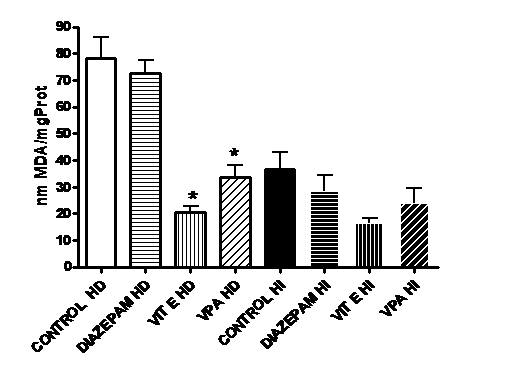
The excess of the free radical production at has been implied has a common factor in pathogenesis of a big number of neurodegenerative processes, including Alzheimer’s and Parkinson’s disease and in ischemia/reperfusion induced brain damage. Valproic Acid (VPA), which traditionally has been used as an antiepileptic drug, now is proposed as a neuroprotective agent, but is not clear it’s mechanisms of action. In this paper, its effect was investigated in an acute oxidative stress model with Sprague Dawley rats, in which iron sulfate was used as injury and lipid peroxidation and carbonylated proteins were quantified at cerebral cortex, showing that it blocked formation of free radicals. Levels of MDA atcerebral cortex that received oxidative injury in the group of animals treated with VPA were 57% lower in comparison to control group, also the amount of carbonylated proteins was 65% lower in the cerebral cortex of experimental animals in contrast to control group. Furthermore, it was found that the antioxidant effect showed by the VPA, was equally significant than showed by vitamin E.
Downloads
Published
Issue
Section
License
Gaceta de Ciencias Veterinarias se apega al modelo Open Access, por ello no se exige suscripción, registro o tarifa de acceso a los usuarios o instituciones. Los usuarios pueden leer, descargar, copiar, distribuir, imprimir y compartir los textos completos inmediatamente después de publicados, se exige no hacer uso comercial de las publicaciones. Para la reproducción parcial o total de los trabajos o contenidos publicados, se exige reconocer los derechos intelectuales de los autores y además, hacer referencia a esta revista. La publicación de artículos se hace sin cargo para los autores. Los trabajos pueden consultarse y descargarse libremente, y de manera gratuita, en extenso en versión digital, desde su enlace Web institucional. Los textos publicados son propiedad intelectual de sus autores. Las ideas, opiniones y conceptos expuestos en los trabajos publicados en la revista representan la opinión de sus autores, por lo tanto, son estos los responsables exclusivos de los mismos.