Influence of wet and dry season on seminal characteristics of Carora bulls
Keywords:
dry, rain season, seminal qualityAbstract
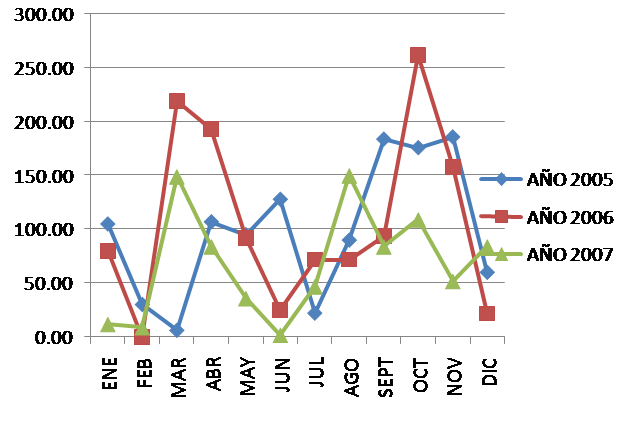
Semen characteristics of bulls may be affected by the environmental conditions of the places. Precipitation rate was determined for the area where the Centro de Inseminacion Artificial Carora (CIAC) is located, 12 km away from Carora city (Venezuela), and rainy as well as dry seasons were well established. Records of three consecutive years demonstrated that March, April, May, August, September, October and November showed the highest precipitations, whereas June, July, December, January and February were the driest months. Precipitation rate in the driest of all three years was 818 mm3, and that in the rainiest year was1289 mm3. Seminal traits of nine Carora bulls, 3 to 4 years old, from the CIAC were studied during two years (year 1 ranging from July 2005 to June 2006 and year 2 from July 2006 to June 2007), being significantly different in their precipitation levels; variables studied were: seminal volume, mass motility, percentage of mobile, progressive motility, vitality and total sperm abnormalities. No statistically significant differences were found for any of the seminal variables studied as related to rainy or dry months. However, when data was related to the year of study, statistically significant differences were established for 4 of the 6 seminal variables. These results suggest that precipitation rate in the rainy season did not directly improve seminal variables; however, semen quality was enhanced when precipitation rates exceed the zone annual average.
Downloads
Published
Issue
Section
License
Gaceta de Ciencias Veterinarias se apega al modelo Open Access, por ello no se exige suscripción, registro o tarifa de acceso a los usuarios o instituciones. Los usuarios pueden leer, descargar, copiar, distribuir, imprimir y compartir los textos completos inmediatamente después de publicados, se exige no hacer uso comercial de las publicaciones. Para la reproducción parcial o total de los trabajos o contenidos publicados, se exige reconocer los derechos intelectuales de los autores y además, hacer referencia a esta revista. La publicación de artículos se hace sin cargo para los autores. Los trabajos pueden consultarse y descargarse libremente, y de manera gratuita, en extenso en versión digital, desde su enlace Web institucional. Los textos publicados son propiedad intelectual de sus autores. Las ideas, opiniones y conceptos expuestos en los trabajos publicados en la revista representan la opinión de sus autores, por lo tanto, son estos los responsables exclusivos de los mismos.