Sustained ventricular tachycardia in a canine (Canis lupus familiaris)
Keywords:
Ventricular Tachycardia, arrhythmia, dogsAbstract
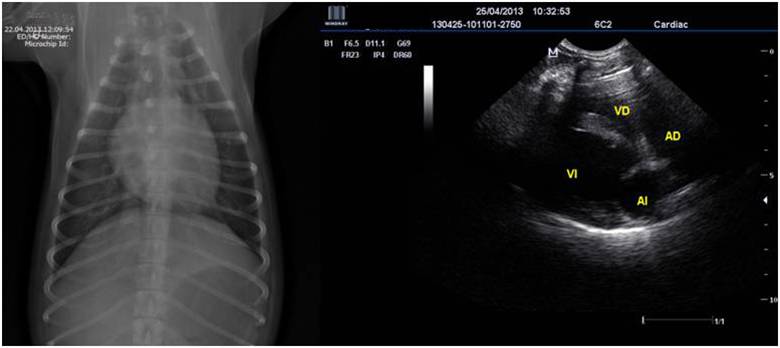
Ventricular tachycardia (VT) in dogs is a life-threatening cardiac arrhythmia, characterized electrocardiographically by three or more consecutive Premature Ventricular Complexes (PVC). PVCs in turn is presented as a wide and bizarre complex, with a longer duration than normal (more than 0.06 sec in dogs) that are not preceded by a P-wave .TV is considered sustained if it lasts more than 30 seconds. A clinical case of a male dog patient, 1 year old, breed Miniature Schnauzer, 9 kg, presented with syncope, lethargy, vomiting, tachycardia, and electrocardiographically diagnosed as sustained ventricular tachycardia and syncope of cardiac origin, is reported. It was show by X-ray and echocardiography had no morphological or structural damage to the heart. Intensive treatment with lidocaine bolus 2 mgs / kg every 10 minutes is established. After the third bolus patient evolves to sinus rhythm with ventricular premature complexes isolated. Maintenance treatment is administered with Atenolol, Enalapril and Furosemide, bed rest addition. Patient was monitored for 96 hours, evidencing that was stable. Subsequently, patient died suddenly after doing heavy exercise unauthorized.
Downloads
Published
Issue
Section
License
Gaceta de Ciencias Veterinarias se apega al modelo Open Access, por ello no se exige suscripción, registro o tarifa de acceso a los usuarios o instituciones. Los usuarios pueden leer, descargar, copiar, distribuir, imprimir y compartir los textos completos inmediatamente después de publicados, se exige no hacer uso comercial de las publicaciones. Para la reproducción parcial o total de los trabajos o contenidos publicados, se exige reconocer los derechos intelectuales de los autores y además, hacer referencia a esta revista. La publicación de artículos se hace sin cargo para los autores. Los trabajos pueden consultarse y descargarse libremente, y de manera gratuita, en extenso en versión digital, desde su enlace Web institucional. Los textos publicados son propiedad intelectual de sus autores. Las ideas, opiniones y conceptos expuestos en los trabajos publicados en la revista representan la opinión de sus autores, por lo tanto, son estos los responsables exclusivos de los mismos.