Anatomical structures involved in traumatic diaphragmatic hernias in small animals
Keywords:
Diaphragmatic hernia, herniorrhaphy, dog, catAbstract
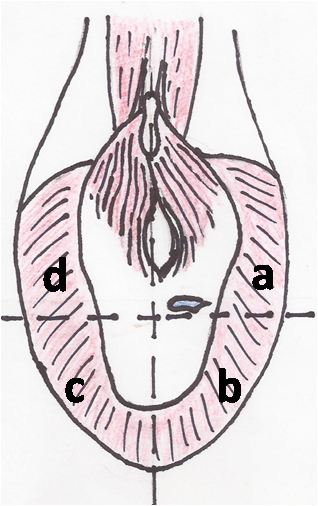
The moment should be performed surgical treatment of a diaphragmatic hernia is established based on involved anatomical structures and clinical status of the patient. Determine whether or not to perform emergency surgical treatment is the key to reducing risk of death in these cases, while earlier surgery be done, the risk will be greater. In this paper seven patients with traumatic diaphragmatic hernia were analyzed. The main objective was to determine anatomical structures involved in the hernia, its relation to defect location and patient's clinical condition. During surgery it was ranked the type and location of diaphragmatic defect and a record of all anatomical structures herniated was performed. In 57.14% of cases the defect was radial type, 42.85% was located in two consecutive quarters and frequency was equal on the right and left side. The most frequently herniated organ was liver and damage was cause of death in two cases. On right side, herniation of the liver, gallbladder, transverse and descending colon was observed. On left side herniation of stomach, spleen, duodenum, jejunum, pancreas and omentum was observed. In cases where stomach was involved, respiratory symptoms worsened with food intake and emergency should be resolved. Herniation of liver or stomach does not always require emergency surgery. However, this should be determined by monitoring the patient and use of complementary tests.
Downloads
Published
Issue
Section
License
Gaceta de Ciencias Veterinarias se apega al modelo Open Access, por ello no se exige suscripción, registro o tarifa de acceso a los usuarios o instituciones. Los usuarios pueden leer, descargar, copiar, distribuir, imprimir y compartir los textos completos inmediatamente después de publicados, se exige no hacer uso comercial de las publicaciones. Para la reproducción parcial o total de los trabajos o contenidos publicados, se exige reconocer los derechos intelectuales de los autores y además, hacer referencia a esta revista. La publicación de artículos se hace sin cargo para los autores. Los trabajos pueden consultarse y descargarse libremente, y de manera gratuita, en extenso en versión digital, desde su enlace Web institucional. Los textos publicados son propiedad intelectual de sus autores. Las ideas, opiniones y conceptos expuestos en los trabajos publicados en la revista representan la opinión de sus autores, por lo tanto, son estos los responsables exclusivos de los mismos.